
Regional Capability Ecosystem
Education Partners
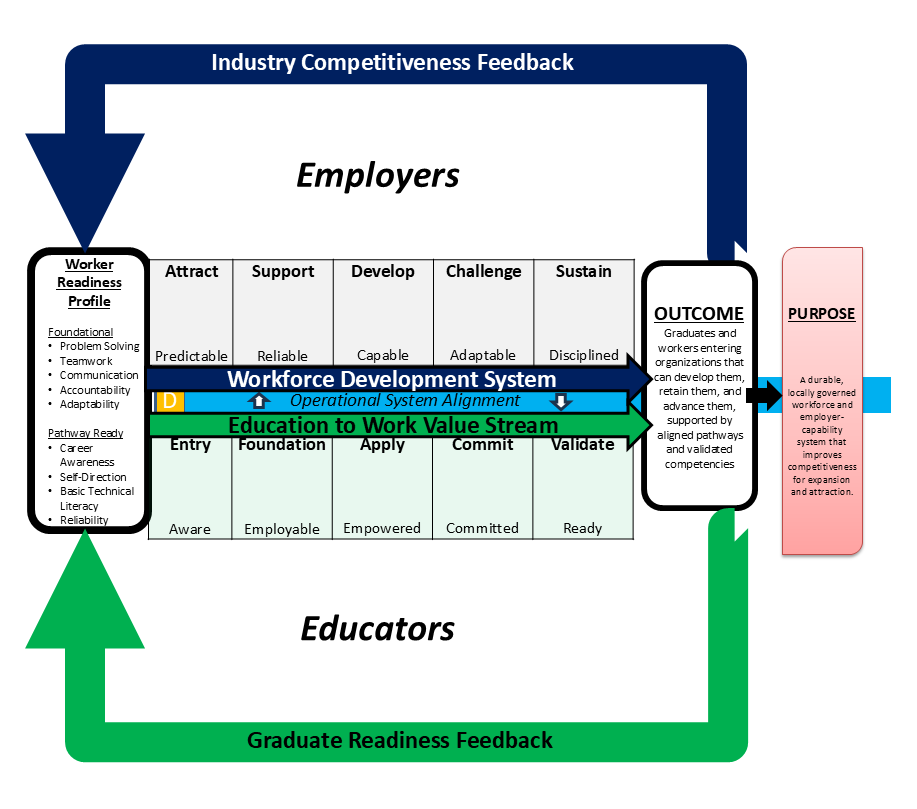
The Regional Capability Ecosystem is designed to strengthen the connection between education systems, employers, and workforce development organizations so that students are better prepared for meaningful careers and communities become more economically competitive.
Through structured cooperation and a dedicated operating layer, the ecosystem helps school systems translate employer signals into clearer student development pathways while preserving full educational authority over curriculum and academic programs.
The goal is not to change what schools control, but to support them in aligning career pathways, competencies, and work-based learning opportunities with real regional economic opportunities.
Ecosystem Goals
1. Support Student Development and Career Readiness
Help students move from early career awareness toward informed career decisions and practical workforce readiness.
2. Strengthen Alignment Between Education and Regional Employers
Create structured communication and feedback loops that help schools understand evolving employer capability needs.
3. Build a Coordinated Regional Talent System
Connect schools, employers, and workforce organizations into a system that develops talent more effectively across the region.
The ecosystem is designed as a continuous learning system, allowing schools, employers, and workforce organizations to refine career pathways over time as regional economic needs evolve.
How the Ecosystem Supports School Systems
School systems play a critical role in preparing students to navigate career pathways and develop the competencies needed in the modern workforce.
The ecosystem supports this work by helping schools connect student development pathways with real opportunities in the regional economy.
Importantly, educators remain fully in control of curriculum, academic programs, and instructional methods. The ecosystem simply provides a structured way for schools to collaborate with employers and workforce partners so that career pathways reflect real opportunities available to students.
Through this structured cooperation, schools gain clearer visibility into employer capability needs, emerging industries, and the types of competencies students will need to succeed after graduation.
Benefits include:
• clearer visibility into regional career opportunities
• support coordinating employer engagement
• expanded work-based learning opportunities
• stronger alignment between pathways and workforce needs
• shared regional partnerships with employers
The Operating Layer
Many schools want stronger connections with employers and workforce partners but face significant coordination challenges.
The ecosystem addresses this challenge through a dedicated operating layer, managed and executed by our team under the direction of the employer-led consortium.
This operating layer acts as the interface between:
• school systems
• employers
• workforce and economic development organizations
Our role is to handle much of the coordination, planning, and execution required to keep the system functioning effectively.
This includes:
• helping identify the current state of career pathways and student development opportunities
• translating employer capability needs into clear competencies and signals for education partners
• facilitating collaboration between schools and employers
• coordinating internships, co-ops, work-based learning, and industry engagement opportunities
• supporting strategic planning and alignment between ecosystem participants
By managing these activities, the operating layer reduces the coordination burden on schools while helping maintain consistent communication across the ecosystem.
Supporting Student Development Pathways
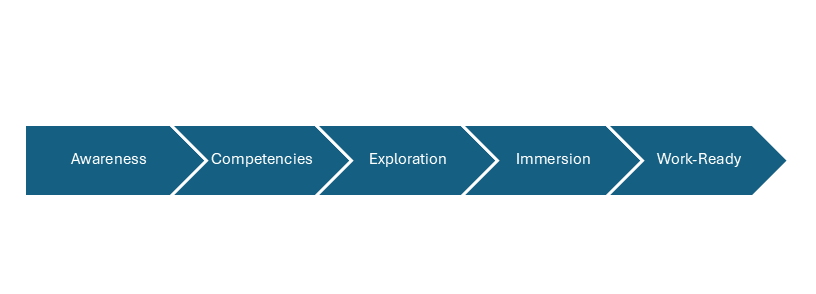
A central goal of the ecosystem is to help students progress through a development pathway that gradually moves from broad awareness to meaningful career readiness.
This pathway includes several stages:
Career Awareness
Students gain exposure to the industries, occupations, and career opportunities available within their region. Through activities such as employer visits, career events, and industry presentations, students begin to see how what they learn in school connects to real work. This early exposure helps them understand the range of career paths that exist in their community. It also helps students begin identifying their interests and strengths. As a result, they can make more informed decisions about the courses, pathways, and experiences they pursue throughout high school.
Foundational Competencies
Schools develop core capabilities that apply across many career paths, including:
• problem solving
• communication
• teamwork
• accountability
• work habits and professionalism
These competencies form the foundation for both academic success and workplace readiness.
Career Exploration and Informed Choice
Students gain deeper understanding of potential career pathways through:
• career exploration programs
• industry engagement
• project-based learning
• exposure to real workplace challenges
This allows students to make more informed decisions about their future direction.
Practical Application and Work-Based Learning
Students gain practical experience through deeper immersion in real work environments.
Examples include:
• internships
• co-ops
• work study programs
• project-based learning with employers
• industry mentorship opportunities
These experiences allow students to develop occupational competencies and gain confidence in their chosen pathways.
Workforce Readiness
By graduation, students ideally have both the competencies and clarity needed to transition successfully into their next step.
This may include:
• entering the workforce directly
• enrolling in a two-year college program
• pursuing trade or technical training
• attending a four-year university
The ecosystem helps ensure that these transitions are intentional and informed, rather than uncertain.
Connecting the Region
An important advantage of the ecosystem model is its ability to connect multiple communities across the region.
Some school systems, particularly in rural areas, may have limited access to employers that hire in significant numbers.
By connecting school systems across the region, the ecosystem allows students to gain exposure to opportunities that may exist outside their immediate community.
Employers in neighboring counties can participate in career exploration activities, internships, and work-based learning opportunities, expanding the range of career pathways available to students.
This regional approach strengthens the talent pipeline while ensuring that students from smaller communities are not limited by the availability of local employers alone.
Stakeholders
The ecosystem brings together several groups that influence student development and workforce outcomes.
Key stakeholders include:
• school systems and educators
• local employers and industry leaders
• workforce development organizations
• economic development agencies
• postsecondary education institutions
• community partners
Each participant maintains its own authority and mission, while the ecosystem helps coordinate collaboration around shared outcomes.
Funding and Support Mechanisms
The ecosystem is supported through a combination of resources that help sustain coordination and development activities.
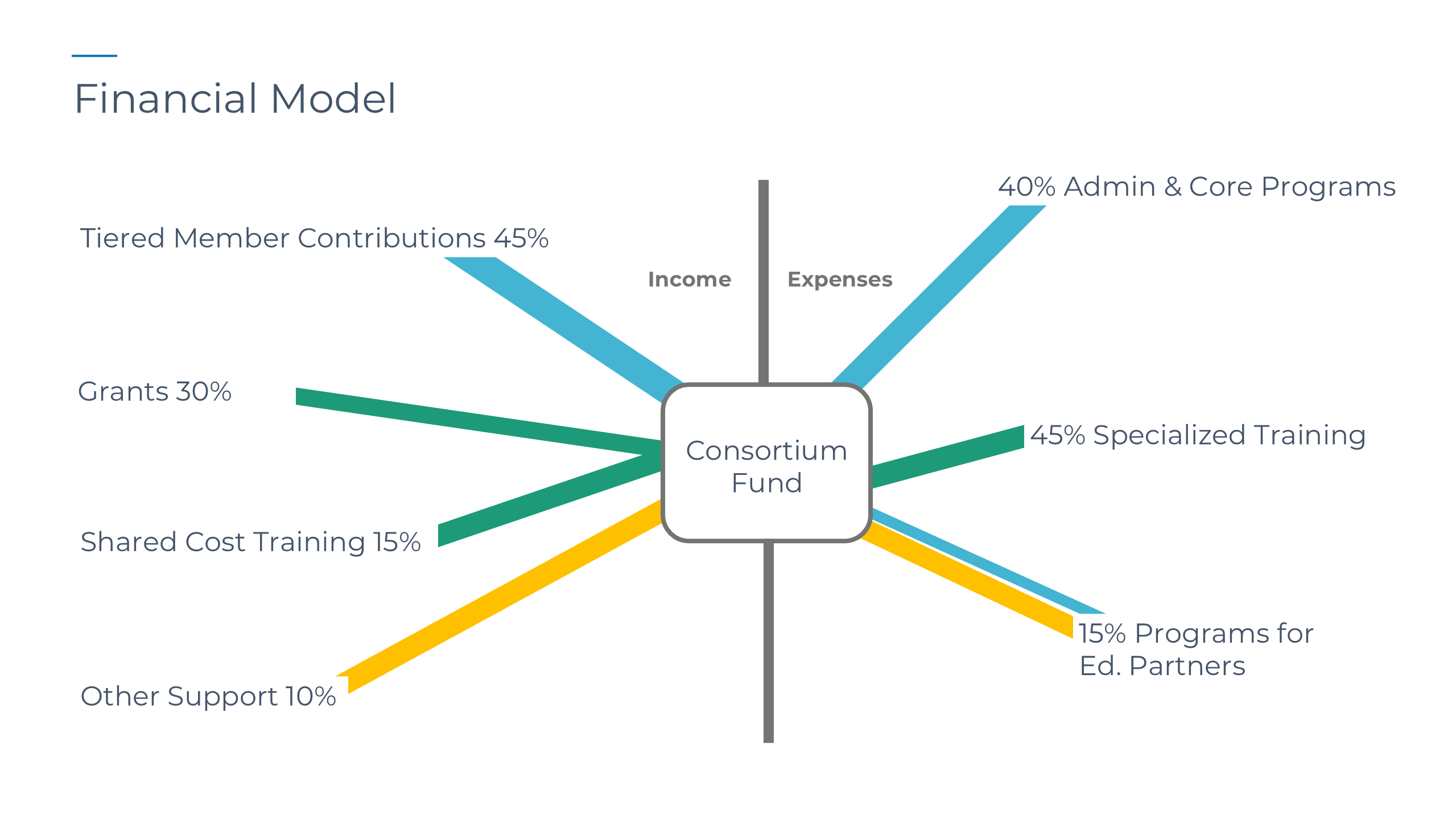
Consortium Support
The employer consortium provides support for many of the ecosystem’s operating activities, including coordination, training, and alignment efforts.
Workforce Innovation Grants
State and federal workforce innovation programs may provide funding for pilot initiatives that strengthen education and workforce alignment.
These programs can help support new career pathways, work-based learning initiatives, and other ecosystem activities.
Additional Workforce Training Grants
Programs such as those supported by the Bluegrass State Skills Corporation may provide resources that support training initiatives and capability development connected to employer needs.
These funding mechanisms help expand opportunities for both employers and students while reducing financial burden on participating organizations.
A Pilot Approach
The Regional Capability Ecosystem is being developed as a pilot initiative.
The goal of the pilot is to:
• test the model in real communities
• learn from early implementation
• refine the approach over time
As the ecosystem demonstrates success, the model can expand gradually to include additional school systems, employers, and communities.
This approach allows the system to learn, adapt, and improve continuously, rather than attempting to implement a rigid structure from the start.
A Learning System
The ecosystem is designed to function as a continuous learning system.
By connecting employers, schools, and workforce partners through structured feedback loops, the system can continuously refine how students are prepared for future opportunities.
Over time, this collaborative approach can help create:
• stronger employers
• better prepared students
• more resilient communities
• a more competitive regional economy